


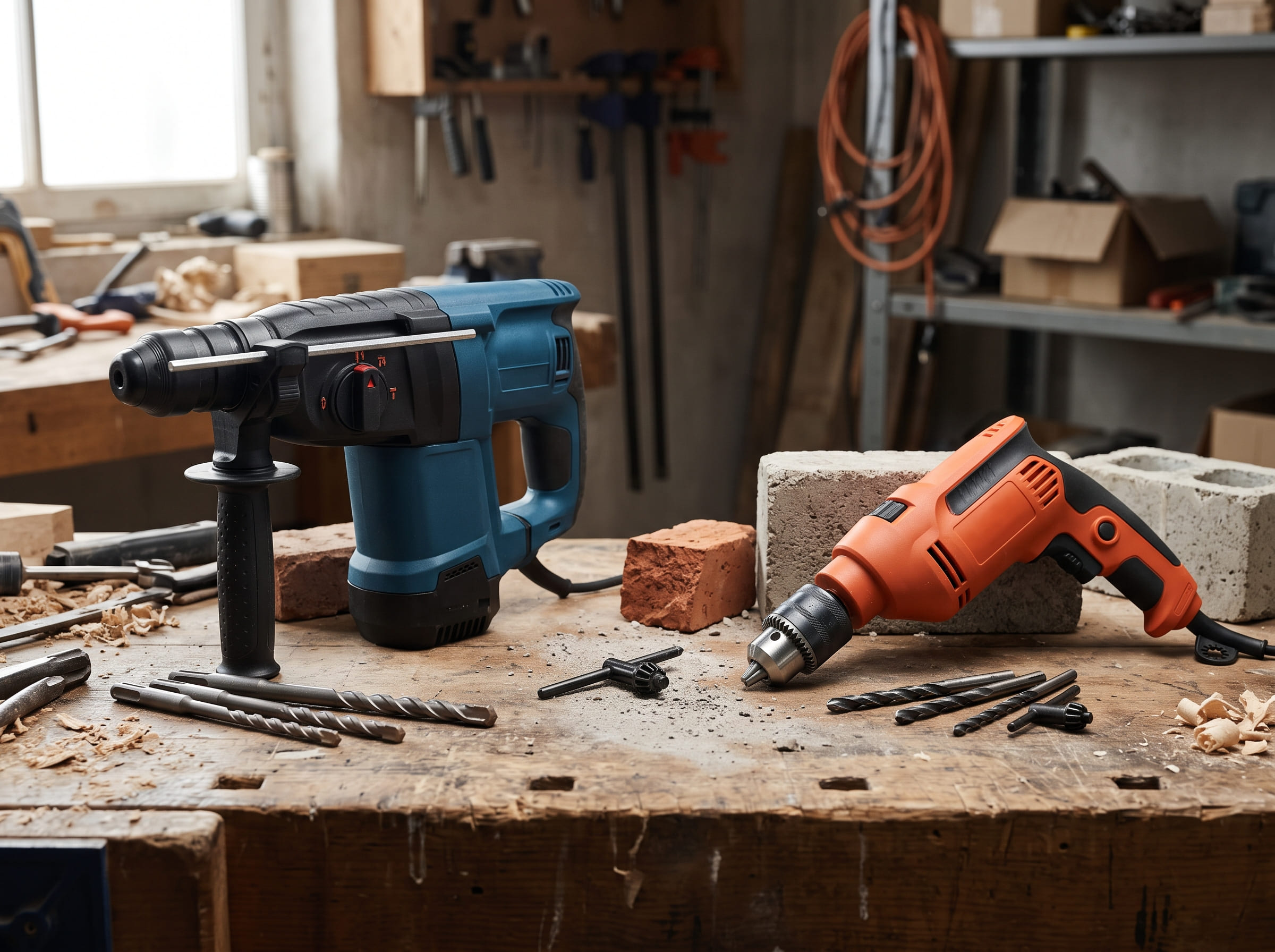

One of the most common tool-buying mistakes is using a standard impact drill for heavy concrete anchor installation, resulting in slow progress and burned drill bits. Understanding the mechanical differences helps you pick the right tool for the substrate.
The Impact Drill (Percussion Drill)
Tools like the TOTAL TG1071366 710W or GT LINK GT-8002 1250W use two mechanical ribbed clutch plates that slide against each other to create micro-impacts as the chuck rotates.
- Impact Mechanism: High frequency, low impact energy (tens of thousands of tiny vibrations per minute).
- Ideal For: Red clay brick, plaster, cinder blocks, wood, and steel (using standard round-shank drill bits).
- Limitation on Concrete: In dense cured concrete, an impact drill relies heavily on the user leaning full body weight into the handle, which dulls masonry bits quickly.
The Rotary Hammer (Pneumatic Hammer)
Rotary hammer units utilize an internal air-cushioned piston assembly that strikes the back of the drill bit directly.
- Impact Mechanism: Lower frequency, massive single-blow impact force measured in Joules.
- Chuck System: SDS-Plus or SDS-Max slotted chucks that allow the bit to slide back and forth freely.
- Ideal For: Heavy cured concrete, stone, slab foundations, and light chiseling/tiling removal.
The Verdict
- Buy an Impact Drill if you need an all-round tool that handles regular wood and metal drilling 70% of the time, with occasional anchor holes into household brick walls.
- Buy an SDS-Plus Rotary Hammer if you are setting mechanical expansion anchors, drilling through structural concrete columns, or routing conduit through solid masonry.